Brain issues never start with a loud warning. They start quietly. Maybe you wake up with a strange heaviness in your head. Maybe you feel tired even after a full night’s sleep. Maybe you sit at your desk in Chandigarh traffic fatigue and suddenly realise your eyes can’t focus the way they used to. Most people in Panchkula tell me the same line: “Doctor, maybe it’s just stress.” And honestly, I understand why you feel that. Stress is an easy explanation. But when your body starts whispering the same signal again and again, you know something deeper is going on.
When your day starts bending around your symptoms when you cancel plans, avoid work, sleep early, or feel scared without a reason that’s your brain asking for attention. And once these symptoms start controlling your routine, the right brain tumor management isn’t about disease treatment anymore. It becomes about taking your life back from fear and uncertainty. Can you imagine living with these signals for months without clarity? No one should have to. That’s why talking about this openly matters.
Understanding Brain Tumors
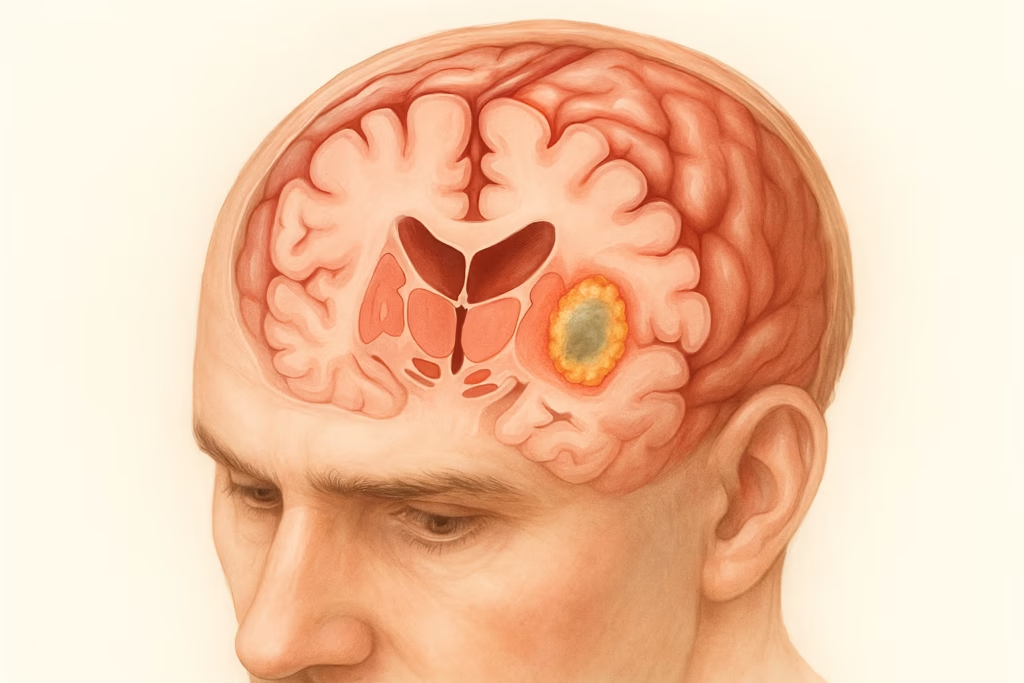
A brain tumor is basically a cluster of cells in the brain that start growing in an abnormal way. Some grow quickly and create symptoms early, while others grow so slowly that people don’t notice them for years. Certain tumors press on important areas of the brain and trigger headaches, weakness, or vision changes. Others stay quiet but still interfere with how the brain sends signals. The impact depends on where the tumor is and how it behaves over time.
The first signs are usually subtle. Here are common brain tumor symptoms that many patients ignore:
- Persistent headaches
- Vomiting not linked to acidity or stomach issues
- Blurred or double vision
- Weakness in arms or legs
- Difficulty speaking or understanding speech
- Personality or behaviour changes
- Loss of balance or coordination
What this really means is the brain is under stress. A tumor headache feels different from a normal tension headache. It may wake you up early morning. It may worsen when you bend down, sneeze, or cough. That’s why early and correct brain tumor diagnosis becomes so important. Scans show things feelings cannot.
And trust me, there’s nothing dramatic about checking. It’s simply responsible.
Critical Red Flags You Shouldn’t Delay
You won’t believe how many people sit with symptoms for six months and then rush to emergency when things get worse. Here are signs that your brain needs immediate attention:
- Severe morning headaches
- Repeated vomiting without stomach infection
- Sudden seizures
- Slurred speech or difficulty finding words
- Personality or behaviour shifts
- Numbness, weakness, or unsteady walking
- Vision issues like shadows, flashes, or double vision
The bottom line is this: your brain does not send the same signal again and again unless something is wrong. So if symptoms repeat, you shouldn’t ignore them.
Myths That Slow Down Diagnosis
Let me share a few myths I hear every week in the Tricity, along with the truth:
- MRI has zero radiation. It’s safe for almost everyone.
- Many tumors grow slowly and remain stable for years.
- Surgery is not the only treatment. Many cases only need monitoring or medicines.
- Young adults can also get tumors. I see many from Panchkula IT offices.
- Painkillers only mask symptoms. They don’t treat the cause.
These myths delay brain tumor treatment, and delays make brain tumor management harder later.
Why Tumors Develop: The Real Factors
Here’s the thing, we still don’t fully understand why some brain cells suddenly start growing in a different way. The brain is complex, and even with all the new research, there are moments when science gives us clues but not complete answers. Tumor formation often depends on tiny changes inside the cells, changes you can’t feel or see. And many times, patients don’t do anything wrong. These shifts just happen silently over years.
Science is improving every day, but the exact trigger isn’t always clear. Still, we do know there are certain factors that increase the chances and make some people more vulnerable than others. These factors help us understand risk, plan better, and avoid ignoring symptoms at an early stage.
- DNA or genetic changes
- Family history
- Hormonal or immune system issues
- Radiation exposure
- Certain infections
- Abnormal cell mutations
Now let’s bring this closer to home. In Chandigarh and Panchkula, people spend long hours on screens, deal with high work stress, breathe in rising pollution, and experience sharp weather shifts. These things don’t directly cause tumors, but they can worsen brain tumor symptoms and delay early brain tumor diagnosis because many assume it’s just:
- Migraine
- Cervical pain
- Sinus pressure
You know how it is. We accept discomfort as normal, keep pushing through, and wait for it to settle on its own until it becomes too strong to ignore.
Short Self-Assessment Tool
Here’s a simple checklist. Just answer Yes or No for yourself:
| Symptom | Yes or No |
|---|---|
| Headaches daily for more than two weeks | |
| Vomiting without acidity or fever | |
| Blurred or double vision | |
| Balance problems or frequent falls | |
| Memory issues or confusion | |
| Weakness or numbness on one side |
If you say Yes to three or more, you need a neurological evaluation. It’s not about fear. It’s about clarity.
Why Home Solutions Don’t Work for Brain Conditions
So here’s what happens. Someone gets a headache and tries water, rest, or a painkiller. Things improve briefly, then the symptoms return, and new ones appear. Without early brain tumor management, the cycle keeps repeating. That’s why timely brain tumor management helps you understand the real cause instead of relying on short-term relief.
The truth is simple. Home remedies don’t reduce internal pressure. They only delay proper brain tumor diagnosis. And when diagnosis is delayed, brain tumor management becomes more complicated. A study from the American Cancer Society highlights that early detection improves outcomes significantly, which is why the right brain tumor management approach matters early. A study from the American Cancer Society highlights that early detection improves outcomes significantly, which is why the right brain tumor management approach matters early.
Painkillers hide symptoms. They never fix the cause.
2026 Brain Tumor Treatment Protocol by Dr. Anurag
Let’s break down how I treat brain tumor cases today. There’s no universal plan because every tumor behaves differently and every patient’s brain responds differently.
Here’s what a complete 2026 protocol looks like:
- Detailed discussion about your symptoms and health
- Neurological examination to test strength, reflexes, and balance
- Advanced MRI with functional mapping
- Precise brain tumor diagnosis including size, location, and impact
- Individualised roadmap for brain tumor treatment
- Monitoring plan for slow-growing tumors
- Coordination with neurosurgeons when required
- Rehabilitation support to help recovery and confidence
So here’s what this means for you. You get clarity, direction, and a structured plan. No guessing, no confusion. And thanks to advanced brain tumor management systems in Chandigarh and Panchkula, you don’t need to travel far for world-class care.
Your treatment, your scans, your follow-ups all available within the Tricity. That brings peace of mind.
Your Best Next Step
Well, here’s the thing. You don’t need to decode these symptoms on your own or sit with fear that grows every day. When your body starts feeling unfamiliar, it can shake your confidence. Anyone in your place would feel the same. But the moment you understand what your symptoms really mean, the worry begins to settle. That’s why if even a few of these signs match what you’re experiencing, meet me once. When we talk about your health with proper brain tumor management in mind, clarity becomes easier.
We’ll sit without hurry, talk through every detail, and look at what your brain is trying to tell you. I’ll explain things in simple words, check what needs checking, and help you make sense of what’s happening. There’s no pressure, no judgment, and no reason to feel alone. You deserve clear answers. You deserve a plan that fits your life. And most of all, you deserve the relief that comes from finally knowing the truth through careful brain tumor management.
Frequently Asked Questions
Do I need an MRI
If symptoms are persistent or unusual, yes. MRI shows details that symptoms cannot.
Can brain tumors be harmless
Yes. Many are benign and grow very slowly.
Is surgery always required
Not at all. Some cases need observation, some need medicines, some need radiation.
How long does recovery take
It depends on tumor type, treatment, and overall health.
Can lifestyle in Chandigarh or Panchkula worsen symptoms
Long work hours, screen-time, pollution, and poor sleep make symptoms harder to tolerate.
When should I worry about headaches
If they’re new, persistent, morning-dominant, or paired with vomiting or weakness.
Can young people get brain tumors
Yes. I see many patients in their 20s and 30s.