Waking up and realizing you cannot move your arm or leg is terrifying. It feels like your own body has become a stranger. You look at your hand, you command it to move, but nothing happens. For the patient, it is frustrating. For the family, it is heartbreaking to see their loved one dependent on others for basic needs. When people first face this loss of control, they often believe nothing will change, yet the truth is that structured paralysis treatment can begin shifting the body in ways that bring hope back into the room.
But here is the honest truth. Paralysis is not always the end of the road. It is a roadblock. With the right paralysis treatment and aggressive neuro rehabilitation, the brain can find new ways to connect with the muscles. It is not magic; it is science, and it requires hard work, patience, and the right guidance.
Medicine saves the life, but rehabilitation gives the life back. Surviving a stroke or spinal injury is just the first chapter. The real story is written in the rehab room, one small movement at a time.- Dr. Anurag Lamba
How Does Paralysis Actually Happen?
Think of your body like a house with a complex electrical system. The brain is the switchboard, and the nerves are the wires that run to the bulbs, your muscles. When any part of this system is damaged, the muscles stop moving not because they are weak, but because they are not receiving instructions. Many people do not realize that paralysis treatment often focuses on reteaching the system to communicate rather than strengthening muscles alone.
Paralysis happens when that connection is cut. It could be due to a stroke, a spinal cord injury, or a nerve disorder like Guillain-Barré Syndrome. The muscle itself is often healthy, but it is not getting the signal to move. Our goal in neuro rehabilitation is to fix that signal or find a detour around the damage.
The Magic of Neuroplasticity
For a long time, doctors believed that once brain cells died, they were gone forever. But Dr. Anurag Lamba explains why that is wrong. “The brain is like a roadmap. If the main highway is blocked by a stroke, we don’t just give up. Through specific repetitive exercises, we force the brain to build a new side road. We teach healthy parts of the brain to take over the work of the damaged parts. We call this Neuroplasticity.” This is one of the reasons paralysis treatment requires repetition, because repetition forces the brain to notice what the body is trying to relearn.
This is why simple rest is not enough. Lying in bed will not rewire the brain. Only targeted, repetitive movement can create these new pathways.
The Golden Period of Recovery
Time is your biggest asset and your biggest enemy. The first three to six months after an attack are known as the Golden Period. During this time, the brain is in a heightened state of repair. It is hungry to learn and more responsive to structured paralysis treatment. If the process begins early, the chances of regaining movement rise significantly. Waiting for strength to return naturally often leads to muscle stiffness and long-term complications that could have been prevented with timely intervention.
Real Stories of Recovery
To show you what is possible, here are two real examples from our clinic.
Case Study 1: The Stroke Survivor
Patient Profile: Male, 58 years old.
The Challenge: After a right-side stroke, his right arm was limp, and he dragged his foot while walking. He had lost hope of ever driving again.
The Approach: Dr. Lamba started him on Constraint-Induced Movement Therapy. We gently restricted his good hand, forcing his brain to use the weak one, integrating this into a broader paralysis treatment plan that matched his daily goals.
The Result: In four months, he regained grip strength. Today, he drives a modified car and walks without a stick.
Case Study 2: The Spinal Injury
Patient Profile: Female, 24 years old.
The Challenge: A road accident left her legs weak. She was bedridden and developing bedsores.
The Approach: We focused on core strengthening and balance training. Electrical stimulation helped activate leg muscles while she practiced standing as part of her ongoing paralysis treatment.
The Result: She walked out of the clinic with a walker in three months and now walks independently with an ankle brace.
More Than Just Physical Therapy
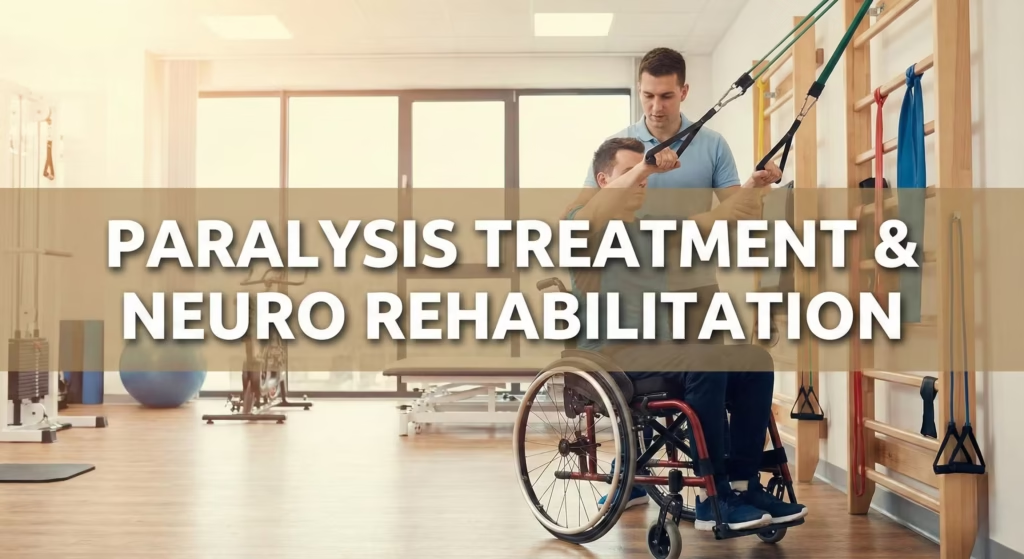
Rehabilitation is not just about doing exercises. It is about relearning how to live. At Dr Anurag Neuro Clinic, our approach covers physiotherapy for gross motor skills, occupational therapy for daily tasks, speech and swallowing therapy for safe eating, and psychological support for emotional healing. Paralysis treatment often combines all these elements to ensure a person recovers not only movement but dignity and independence.
Why You Need a Neurologist
Many people ask, why should I see a doctor? “A physiotherapist is the engineer who builds the bridge, but the neurologist is the architect who designs it. We manage the medical side, preventing complications and deciding which exercises are safe.”— Dr. Anurag Lamba. A neurologist ensures your paralysis treatment is safe, structured, and aligned with your specific brain or spinal injury.
The Road Ahead
Recovery is a marathon. There will be good days and difficult days, but every small twitch, every small shift, matters. If you or a loved one is waiting for a miracle, understand that the miracle lies in consistent paralysis treatment supervised by specialists who know how to guide the body back toward movement. The earlier the journey begins, the brighter the outcomes tend to be.